

1. What Is a Boxer Switcher?
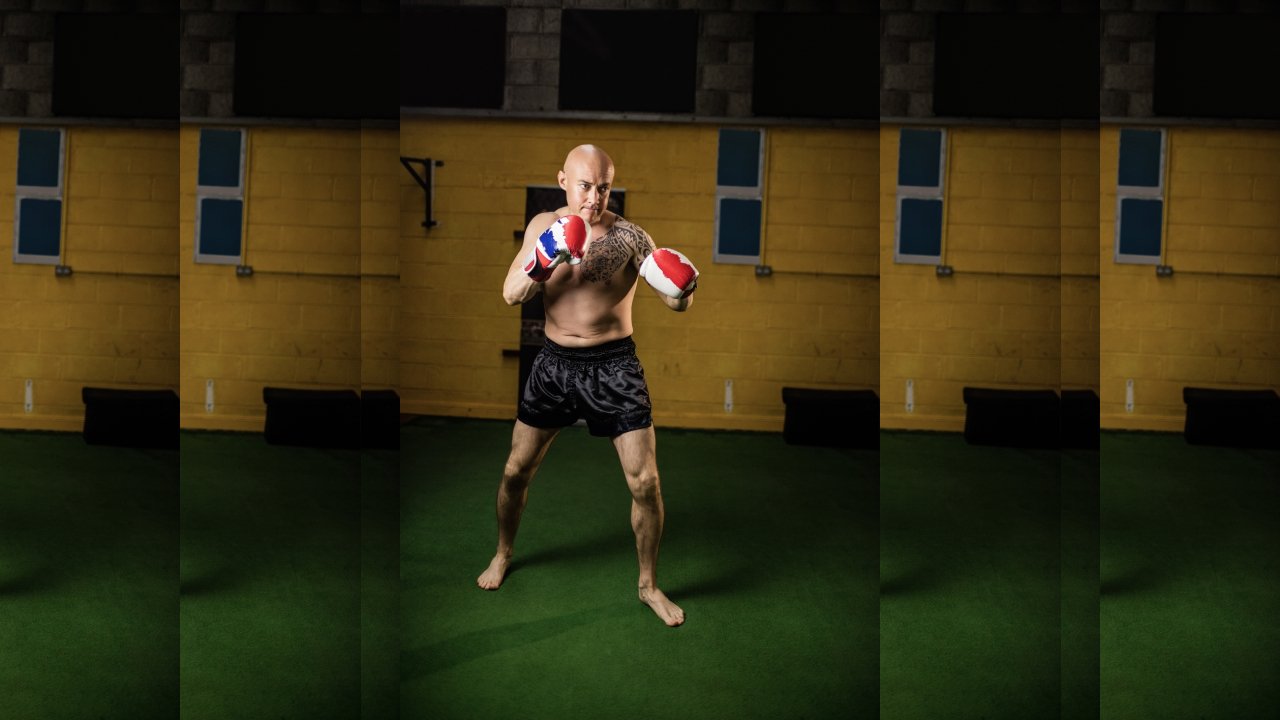
A boxer switcher is a boxer who can switch stances during fights. There are two main stances in boxing: orthodox and southpaw. Most boxers stick with only one stance, while fewer can fight with both stances, confusing their opponents throughout the game.
2. What is a Switch Hitting Boxing?
A switch-hitting boxing is a fighter who alternates stances between punches. It is also known as switching your stance in boxing or switch stance. In this act, the boxer changes the position of his lead foot and hand.
3. Benefits of Switching Stances
The main benefits of switching stances are as follows:
3.1 Unpredictability
Switch-hitting boxing forces your opponent to defend against attacks from varying angles. It keeps them confused and disrupts their timing.
3.2 Closing Distance
Shifting your boxing stance while punching is the best way to close the distance with your opponent. It keeps you in a dominating position.
3.3 Mid-Fight Adaptation
You can switch your stance during the fight if you are not able to dominate your opponent and they are nullifying your punches and jabs.
3.4 Improved Footwork
Learning effective switch-hitting, boxing, or stance switching improves your footwork, coordination, balance, and overall agility in your game.
3.5 Access to new angles
You become better at deflecting strikes and punching your opponent from either side due to stance switching in boxing.
4. The 4 Best Ways to Switch Stances in Boxing
The top four ways to switch stances in boxing are as follows:
4.1 The Simple Shuffle (In-Place Switch)
Stay in the same spot and swap your rear and lead positions by shuffling your feet. This is the quickest method.
- When to use: Use this when you are at a distance to reset the fight’s rhythm.
- Pro Tip: Be explosive during the simple shuffle switch to avoid being caught square (parallel) to your opponent.
4.2 Shifting (The Offensive Switch)
Throw a power punch while stepping forward to move into an opposite stance. For example, if you are an orthodox fighter, carry your right leg forward, throw a rear-hand hook, and then move into a southpaw lead.
- Best for: Generating maximum power and chasing down opponents.
- Famous Example: Gennady Golovkin often uses shifting to deliver flurries.
4.3 The Pivot Switch
Swing your rear foot around by pivoting on your lead foot and moving into a new stance while turning your body to a new angle.
- Best for: creating blind spots, defensive evasion, and counterattacks.
- Safety Check: Maintain distance during the transition by keeping your lead arm out.
4.4 The Switch Step (Mike Tyson Style)
Move sideways slightly and then push off suddenly to exchange rear and lead feet. It is used primarily by shorter, more explosive boxers.
- Best for: Setting up uppercuts at close range and devastating hooks.
- Tactical Rule: Don’t do this switch when your opponent is static and at long range because this will expose you to punches.
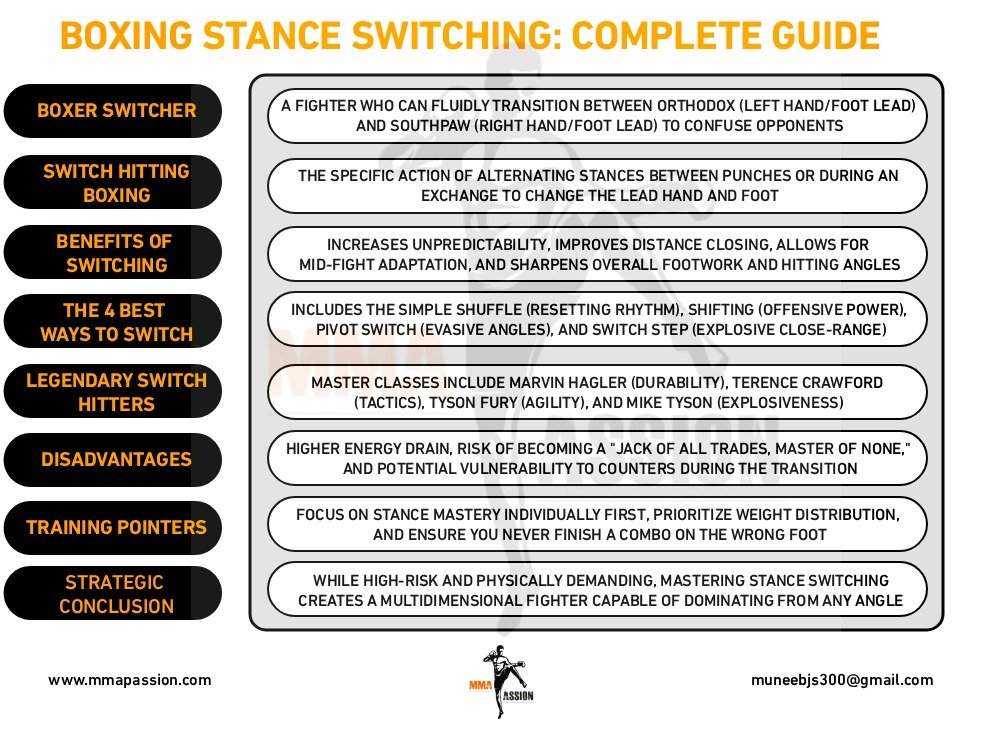
5. Legendary Switch-Hitters to Study
You should watch these great boxers to truly understand the “why” and “when” of switching:
- Marvelous Marvin Hagler: He is considered the greatest stance switcher in boxing, and he was able to fight an entire round from any stance.
- Terence Crawford: A master who can switch stances during the fight to exploit specific weaknesses of the opponent.
- Roy Jones Jr.: He was so skilled in switching boxing stances that his opponents often didn’t even notice the switch.
- Andre Ward: He used to switch stances only when he spotted an opportunity rather than constantly.
- Tyson Fury: He was a master boxer switcher who could offset his heavyweight by his agility and lightness in his feet, which only lightweight boxers can do.
6. Disadvantages of Switching Stances in Boxing
The main disadvantages of switching stances are as follows:
- It takes a lot of energy, so it can be very tiring for the boxer-switcher.
- Switching stances constantly makes you a boxer without a primary stance. This can make you a weak boxer overall.
- It slows down your game.
- It may reduce the power generated for punches during stance switching in boxing.
- If done without proper training, it can expose you to several punches and hits by your opponent.
7. Pointers for Switching Stances in Boxing
Ensure the following things while training for switching stances in boxing:
- Focus on one stance first and then move to the other.
- Practice combinations in both stances, first orthodox and then southpaw.
- Focus on footwork first and then practice the punches.
- Learn effective weight distribution before, during, and after boxing stance switching.
- Avoid finishing your combination on the wrong foot.
- Don’t step over with the cross to shift back into the orthodox.
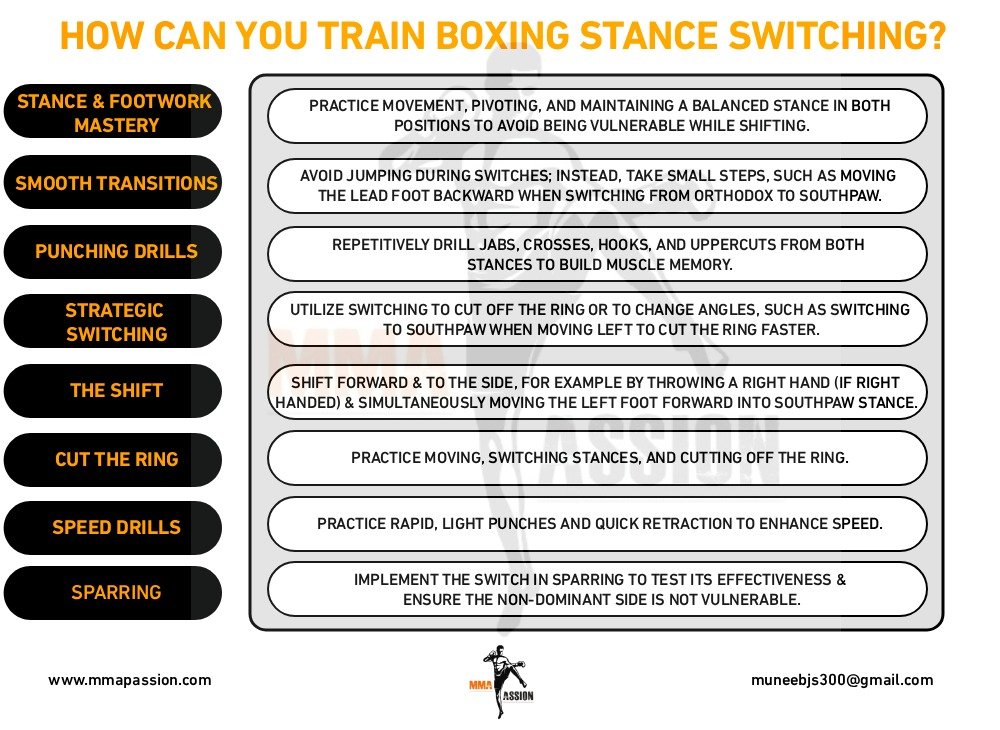
8. How Can You Train Switch Hitting Boxing?
You can train or practice switching stances in boxing in the following ways:




Muneeb Maqsood is an SEO professional and digital marketer with over 4 years of experience helping international brands grow through data-driven SEO and high-quality content. He specializes in on-page, off-page, and technical SEO, content writing, and e-commerce optimization. Muneeb has worked with clients across the UK, USA, Canada, and Pakistan, translating complex ideas into search-friendly, reader-focused content that ranks and converts.