
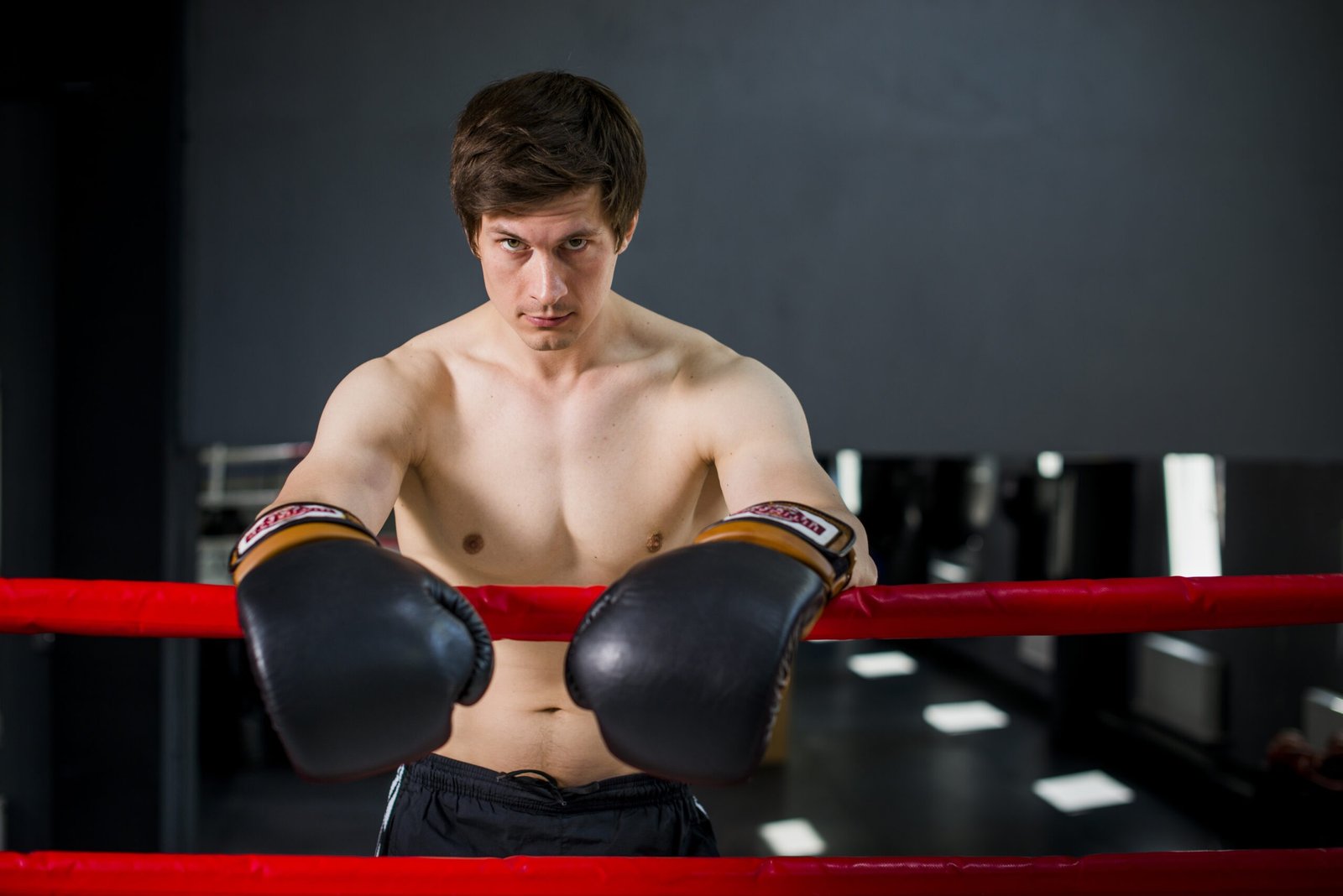
1. What is a Boxer Stance or Boxing Stance?
A boxer stance or boxing stance is a body position that a boxer uses for offense, mobility, and defense against the opponent. It involves positioning the hands, feet, knees, and legs to prioritize power and punch execution.
2. What Are The Different Boxing Stances?
2.1 The Core Stances: Orthodox and Southpaw
The two main boxing stances are the orthodox and southpaw. In both these stances, the main aim of a fighter is to use their strongest hand (right or left) to generate maximum power by keeping it in the rear.
2.1.1 Orthodox Boxing Stance (Right-Handed Boxing Stance)
It is used by the right-handed fighters, in which they keep their left side (hand and foot) in the leading position and their right hand in the back near the chin.
2.1.2 Southpaw Boxing Stance (Left Handed Boxing Stance)
It is the mirror of the orthodox stance. It is used by left-handed fighters, who keep their right side (hand and foot) in the leading position and their left hand behind. This stance is very difficult for orthodox fighters to fight from because it creates awkward, difficult angles.
2.1.3 Switch-Hitter
These boxers learn and train both boxing stances, allowing them to outperform boxers who use a single stance by confusing them throughout the fight.
2.2 Specialised Stances and Guards
Some boxers develop their own stance or change a little bit by adopting specific configurations, which are known as specialised stances.
2.2.1 Philly Shell (Shoulder Roll or Side Stance)
This stance was used by Floyd Mayweather, making him the unbeatable boxer in history. This is perfect for energy conservation and counter-punching.
2.2.2 Peek-a-Boo Stance
This stance was popularized by Iron Mike Tyson. This is an aggressive stance perfect for short-hight boxers in which there is a constant head movement, such as weaving and bobbing, and both hands are kept closer and higher near the cheeks.
2.2.3 Crouching Stance
In this stance, a boxer gives their opponent a smaller target by staying low and hunched over. This stance is used mostly by shorter boxers to explode upward with powerful uppercuts or hooks and to duck under straight punches.
2.2.4 Wide Stance
A boxer stays wide, which gives them more leverage, stability, and balance for heavy hitting. But this reduces movement.
2.2.5 Squared Stance
In boxing squared stance, the boxer aligns their feet, shoulders, and hips to generate power for upper cuts and hooks by facing the opponent at close range. It is ideal for inside fighting, infighting, and head movement-heavy defense.
2.2.6 Sideways Stance
In a sideways (or “side-on”) boxing stance, the boxer maximizes the range for jabs and crosses and reduces the target area by positioning the body at an angle to the opponent. It is ideal for defensive counterpunchers and long-range fighters.
2.2.7 Basic Guard
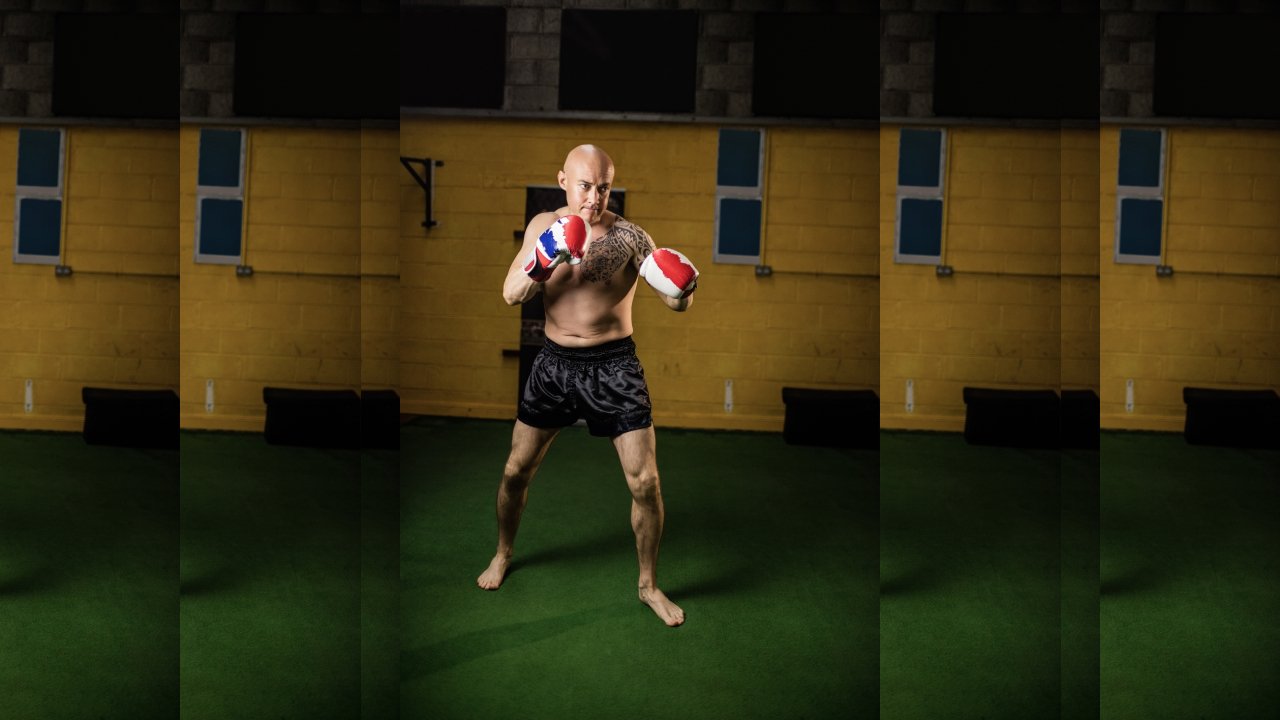
It is a defensive stance in boxing that beginners adopt to deliver quick offense and protect their body and face. They keep their chin tucked, bend their knees, hands near their cheeks, elbows near their ribs to protect them, and feet shoulder-width apart.
2.2.8 Bare Knuckle Boxing Stance
This stance involves a long guard, a slightly diagonal posture, and an upright posture to minimize head injury and manage distance. The rear hand is near the chin, and the lead hand is used to parry or measure the distance.
3. Choosing the Right Stance: What Boxing Stance Should You Use?
Not all boxers are the same. So you shouldn’t choose a boxing stance based on your favourite boxer. Focus on choosing what fits you perfectly, given your unique physical attributes.
3.1 For Beginners
If you are just starting, then choose the classic stance in which you should:
- Keep your feet at shoulder-width apart
- Bend your knees slightly.
- Distributed weight evenly.
- Focus on balance during moving and punching before moving to advanced guards like the Philly Shell.
3.2 For Shorter Fighters
Stances like the Crouch or Peek-a-Boo are ideal, but you can choose any other based on what fits you the most.
3.3 For Tall/Long-Range Fighters
If you are tall, then choose the upright stance because it will help you to use your reach advantage, maintain high mobility, and keep your opponents at bay with the jab.
4. Essential Stance Checklist: Do’s of Boxing Stances
You should ensure the following things in any stance you choose because it will help you to build a strong foundation:
- Chin Down: You should tuck your chin into your lead shoulder or your chest to protect against the punches.
- Elbows In: Keep your elbows near your ribcage to protect it against body shots by your opponent.
- Back Heel Up: Keep the heel of the back foot slightly off the ground because it will help you to pivot and move explosively.
- Eyes Up: Always keep your eyes up on the shoulders or chest of your opponent and don’t look at the floor. This will help you defend against your opponent’s punches and moves more effectively.
5. Don’ts of Boxing Stances
Avoid the following things in all boxing stances:
- Raising your chin.
- Losing your back arm.
- Lean too far forward.
- Being flat-footed.
- Keeping feet too close.
- Dropping your guard.
- Locking your knees.
6. What Is The Difference Between Boxing Stance & Guard?
A boxing guard explains how you are holding your hands during fighting, while a boxing stance means how you are positioning your feet and body.
7. How To Get Into A Proper Boxing Stance?
You can get into a proper boxing stance by following the steps below:
- Put your dominant foot and hand in a slight tilting backward position from your opponent. This will allow you to generate maximum force and momentum to hit your opponent.
- Keep your non-dominant hand on your face and your dominant hand near your chin.
- Keep both feet at the distance of your shoulders.
- Put more weight on non dominant foot. This will allow you to move using your dominant leg.
- Throw a few jabs and practice in this proper boxing stance in front of a mirror.
- Maintain your balance in the stance.
8. Importance of Boxing Stances: Top Benefits
A good boxing stance will help you to:
- Keep opponents off-guard.
- Improve your defense positioning.
- Generate powerful punches.
- Deliver accurate and effective punches.
- Maintaining your center of gravity.
- Improving your boxing and punching techniques.
- Improve your boxing footwork.
- Improving your mobility and agility.
- Move quickly and dodge punches.
9. How To Practice Boxing Stances?
- Film your stance or practice in front of the mirror and compare it with the expert boxers to see how well you are performing.
- As you become an expert in one stance, start learning other stances to become better.
10. Frequently Asked Questions
10.1 Is Constantly Switching Stances In Boxing Good?
Yes, constantly switching stances in boxing is an advanced technique with high rewards but high risk. Only do it if you have mastered it. It can confuse your opponent, create new angles for attack, and disrupt their rhythm.
10.2 Who Should Use the Orthodox Boxing Stance?
Right-handed boxers of all weight classes, from beginners to professional fighters, can choose the orthodox boxing stance. It is an old boxing stance.
10.3 Who Should Use the Southpaw Boxing Stance?
Left-handed boxers of all weight classes, from intermediate to professional fighters, can choose the southpaw boxing stance.
10.4 Who Should Use Crouching Stance?
Both right and left-handed boxers can choose this stance, but it is perfect for shorter boxers. You can also use its variations, such as semi-crouch, full crouch, or fight low.
10.5 Who Should Use a Wide Stance?
Both right and left-handed boxers can choose this stance if they want to land powerful strikes on their opponent. It is best suited for advanced boxers.
10.5 How Many Degrees Should Be Applicable In Boxing Stance?
If you are in a proper boxing stance, then the front foot should be at an angle of 45 degrees relative to your opponent, and the rear foot can be angled between 45 and 90 degrees.
10.6 Did Joe Frazier Ever Box In A Right-handed Stance?
Joe Frazier was a proper orthodox boxer and never fought in a right-handed boxing stance.
10.7 What is a Thai Boxing Stance?
The key elements of Thai boxing stance or Muay Thai are:
- Feet shoulder-width apart.
- Weight is mostly on the back leg.
- Knees slightly bent.
- Elbows tucked to the ribs for protection.
- Hands high near the eye.
10.8 What Was The Mike Tyson Boxing Stance?
Mike Tyson used the Peek-a-Boo stance in his boxing career.
10.9 What is the Perfect Boxing Stance?
The best boxing stance or the perfect one cannot be the only one, as there are a lot of stances, each with its own pros and cons. It depends on the boxer how well they use the stance. The perfect stance for you will be the one that suits your physical attributes.
10.10 What was Floyd Mayweather Boxing Stance?
Floyd Mayweather used philly shell boxing stance to fight his opponents. This made him undefeated throughout his career.
10.11 What Are The Boxing Stance Types?
The boxing stances, names, or types are:
- Orthodox
- Southpaw
- Switch Hitting
- Basic Guard
- Philly Shell
- Crouch
- Peek-a-Boo
- Sideways Stance
- Squared Stance
- Wide Stance

Muneeb Maqsood is an SEO professional and digital marketer with over 4 years of experience helping international brands grow through data-driven SEO and high-quality content. He specializes in on-page, off-page, and technical SEO, content writing, and e-commerce optimization. Muneeb has worked with clients across the UK, USA, Canada, and Pakistan, translating complex ideas into search-friendly, reader-focused content that ranks and converts.